

The Reality Generation Engine - Part 4
What Gamers Have Always Wanted - But Has Never Been Built

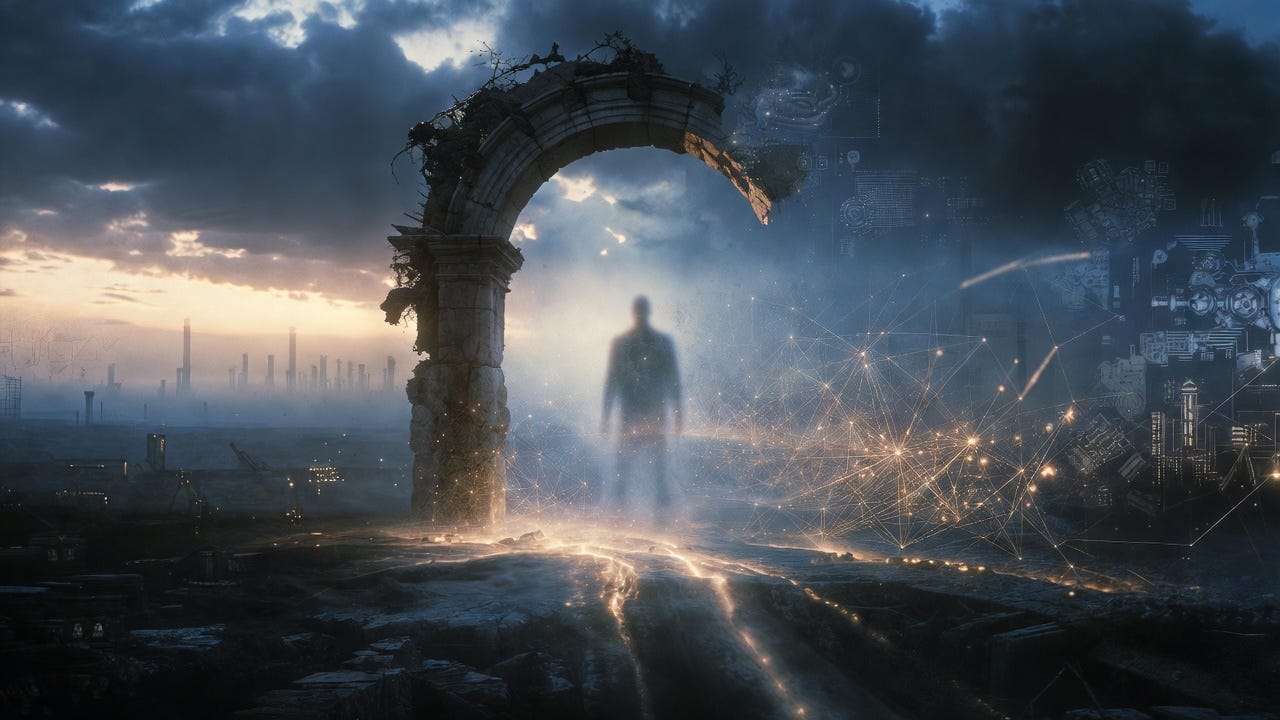
The Shifting Paradigm: Articles 1-3
Setting the Stage for the Game-Changing World Gamers Crave
We’ve crossed the threshold.
In the Shifting Paradigm Series, the first three articles have unveiled the invisible architecture of our emerging reality: a fusion of consciousness, AI, and interactive worlds that don’t just simulate life, they co-evolve with it.
Article #1: The Opening of the Axis Mundi
Launched the series by mapping our civilizational crossroads. Old systems are collapsing. Adaptive AI is rising. Symbolic intelligence is reawakening. And gaming? It’s transforming from escapism into a platform for human evolution. This isn’t prediction, it’s the blueprint for the world we’re already building.
Article #2: Why Consciousness Is the Next Game Engine
Revealed the fatal flaw in every game ever made: they’ve rendered worlds, but never you. Traditional engines master physics, graphics, and stories that feel real. But they ignore your mindset, patterns, emotions, and growth. Enter the Consciousness Engine, a system where your inner world becomes the core renderer. Quests from your blind spots. Narratives from your myths. Worlds that grow as you do. The Reality Generation Engine (RGE) isn’t playing you, it’s playing back, turning gameplay into psychological symbiosis.
Article #3: The Future of AI – Symbiotic, Narrative, and Human-Centric
Shifted the AI conversation from fear to partnership. Forget tools or threats, AI’s destiny is co-intelligence. It learns your symbolic language, mirrors your emotional rhythms, and crafts meaning through story (humanity’s oldest OS). Games lead the way: imagine NPCs that evolve psychologically, worlds reshaped by your identity, quests born from your patterns. Neuroscience backs it—neuroplasticity via play. The RGE prototypes this: not artificial intelligence, but augmented you.
These articles aren’t theory. They’re the philosophical scaffolding for RGE, a system where mind + AI = emergent magic.
And now? The payoff gamers have dreamed of for decades.
What Gamers Have Always Wanted but Has Never Been Built
Every gamer knows the ache: you dive into a stunning world, but it never truly sees you. NPCs forget. Stories repeat. Once the content’s done, it’s over.
Until now.
Agentic Reality: The Gathering
There’s a quiet longing shared by millions of gamers across generations.
It’s not for bigger maps. Not for better graphics. Not for higher framerates, more loot, or more endings.
It’s something deeper. Something older. Something every gamer has felt but rarely put into words.
The desire for a world that finally…
Responds. Learns. Adapts. Remembers. Grows. And feels alive — not just visually, but psychologically.
For decades, games have promised “interactive worlds.” But the truth is simple:
We’ve never actually had one.
We’ve had beautiful illusions. Brilliant simulations. Masterfully crafted experiences. But not a world that knows you, one that evolves because of you.
Gamers have always wanted this. But no engine has ever made it possible.
Until now.
The Unspoken Promise of Gaming
Every gamer has a moment when they realize:
“I love this world… but it doesn’t truly see me.”
NPCs don’t remember. Stories don’t change because of who you are. Difficulty doesn’t adapt based on your psychology. Quest lines don’t shift based on your inner patterns. Characters don’t evolve with you.
Games have always been interactive in mechanics, never in meaning.
That gap between what games offer and what gamers desire has been widening for decades.
We want:
● worlds that surprise us
● characters with depth
● experiences that matter
● choices that echo
● stories that unfold uniquely for us
But most of all, we want worlds that feel like they’re actually alive.
Not alive because of graphics. Alive because of responsiveness.
Why Current Games Can’t Deliver What We Want
The issue isn’t creativity. Game developers are some of the most visionary minds alive.
The issue is that traditional worlds are:
● scripted
● pre-authored
● static in their underlying logic
● unaware of the player
● non-adaptive
● repetitive after a while
Every playthrough is a variation of the same skeleton. Every NPC is a performance, not a person. Every storyline is a high-budget illusion.
Gamers sense this. We always have.
We push systems to their limits, searching for cracks where true emergence might appear.
But emergence never fully arrives. Because emergence requires something games have never had:
A mind on the other side.
The Missing Ingredient: A Responsive Intelligence
Gamers don’t want games to be harder or easier.
We want games to be aware.
Aware of:
● patterns we favor
● archetypes we gravitate toward
● how we solve problems
● how we react under pressure
● the stories we subconsciously create
● the emotions we express through play
● the themes that follow us from world to world
This desire is ancient.
It’s why tabletop RPGs feel alive, because the Dungeon Master is alive. It’s why emergent games like Minecraft or Dwarf Fortress feel magical, because the systems surprise us. It’s why the best streamers create narratives out of thin air, because they impose meaning on chaos.
Gamers crave intelligence behind the world.

A living, adaptive, growing presence. Not to control us, but to co-create with us.
The Game Every Gamer Has Imagined
Every gamer has dreamed of a world where:
● your choices change the psychology of the world
● characters remember who you were last session
● your behavior shapes the story’s tone
● challenges adapt based on your unique patterns
● the world reacts to your identity, not your inputs
● you grow, and the world grows with you
Gamers don’t want endless content.
We want endless meaning.
We don’t want bigger maps.
We want deeper worlds.
We don’t want more choices.
We want consequences that matter.
We don’t want perfect simulations.
We want worlds that feel like partners, not playgrounds.

Why This Has Never Been Built…Until Now
The missing layer has always been the same:
Responsiveness at the level of consciousness.
Not just reacting to button presses. Not just reacting to behavior. But reacting to who you are in the moment and who you’re becoming.
Traditional engines only track:
● actions
● coordinates
● states
● triggers
But the games we’ve longed for need engines that track:
● patterns
● intentions
● emotional tone
● symbolic preference
● narrative arc
● cognitive growth
● developmental progression
This is not possible with old technology.
It requires a new category.
The Birth of a New Genre: Responsive Worlds

The Reality Generation Engine (RGE) aims to do something games have never done:
Create worlds that adapt to human consciousness.
Not in a mystical way, in a deeply interactive way.
It’s the difference between:
a world that responds to actions and a world that responds to patterns.
Between:
a game that entertains you and a game that evolves you.
Gamers have been waiting decades for this.
Even if they didn’t have the language to describe it, they’ve felt the absence.
RGE is the first attempt to fill that gap.
The first attempt to build a world that:
● learns your mind
● grows with you
● mirrors your inner transformation
● adapts its narrative based on your arc
● reacts to your style, not your actions
● becomes a partner in your play
This is the game we’ve always imagined.
The one we’ve always wanted. The one that was always just out of reach. The one no engine could ever build.
Until now.

The Future Gamers Deserve
Gamers don’t want more games.
We want worlds worth inhabiting.
We want stories worth co-authoring.
We want experiences that become part of who we are.
The next generation of gaming won’t be defined by pixels or polygons.
It will be defined by responsiveness, intelligence, and relationship.
A living world. A reflective world. A world with its own mind, one that grows alongside yours.
This is more than a genre shift.
It is the birth of a medium.
And for the first time in gaming history, we’re ready to build the world gamers have always dreamed of.
Coming Next in the Shifting Paradigm Series
The mirror awakens.

In the Axis Mundi Series, we’ve traced the dissolution of boundaries between mind, machine, and myth. Next up, Article #5 dives deeper into the heart of gaming’s evolution: worlds that don’t just wait for your input, they respond to your essence.
Article #5: A Game That Plays Back – Introducing Adaptive Narrative Worlds
What if a game didn’t just track your clicks, but who you’re becoming? Traditional games see your avatar, stats, and choices. But adaptive narrative worlds see you:
your patterns, psychology, emotional rhythms, and personal growth.
They transform gameplay into a dialogue, a dance where the world evolves as you do, turning your inner story into external quests, puzzles, and terrains.
This isn’t random reactivity. It’s a living relationship:
Worlds that recognize your behaviors and interpret them symbolically.
Narratives that adapt to your state, growing more complex as you level up.
Experiences that feel like a mirror, companion, and challenger all at once.
Powered by the Reality Generation Engine (RGE), these worlds mark the end of one-sided games and the dawn of co-creation. No more hidden walls, just infinite emergence, deep resonance, and stories that feel authored by your myth.
Ready for a game that finally sees you?
The age of adaptive narratives has begun. Stay tuned for the full reveal.